|
Zambia is a vast country of more than 290,000
square miles (751,000 km 2), half of which is
pristine wilderness inhabited by some of the most
diverse wildlife in Africa. What makes Zambia
so distinct from other African hunting destinations
is the zoning of land areas around the national
parks as game management areas. The free movement
of animals between the parks and the game management
areas ensure a reliable supply of superior trophies.
Altogether, national parks and game management
areas represent about 33 per cent of Zambia's
total land area, and nearly two-thirds of this
is game management area, totalling over 63,320
sq miles (164,000 km 2). The diversity of terrain
includes river valleys, Kalahari Bushveld to the
southwest, plateau woodlands throughout the interior,
as well as swamps and extensive flood plain savannahs
thereby providing one of the most exceptional
and exciting selection of trophy animals, (35
species), to be found in a single African country.
The safari hunting season extends throughout
the dry season from the cool, dry months of May
through July to the dry, hot months of October
and into November. By late November, when the
first rains fall, safari camps close; roads turn
to mud and become impassable, streams start to
flow again and cut off entry into many of the
hunting areas. Dutiful wildlife scouts remain
behind to police the area for next year's hunting
season. Rains continue into April and by late
May safari camps are reopened.
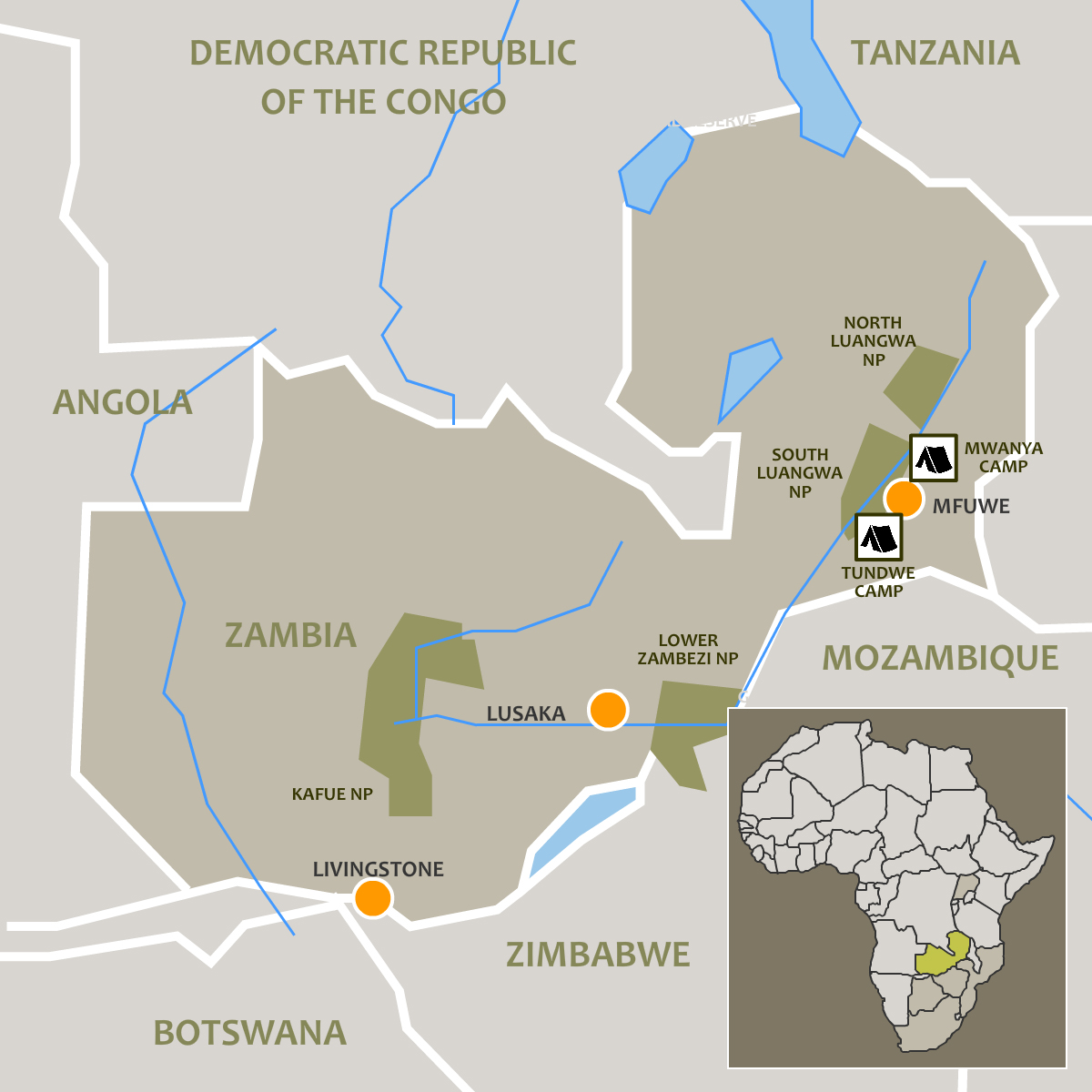
HUNTING AREA: KASONSO
This area is 2,094 km² in extent. Kasonso's
eastern boundary borders onto the Kafue National
Park allowing the game to migrate unhindered.
Owing to the varied habitats of Kasonso, a diverse
specie list can be offered. It is the only area
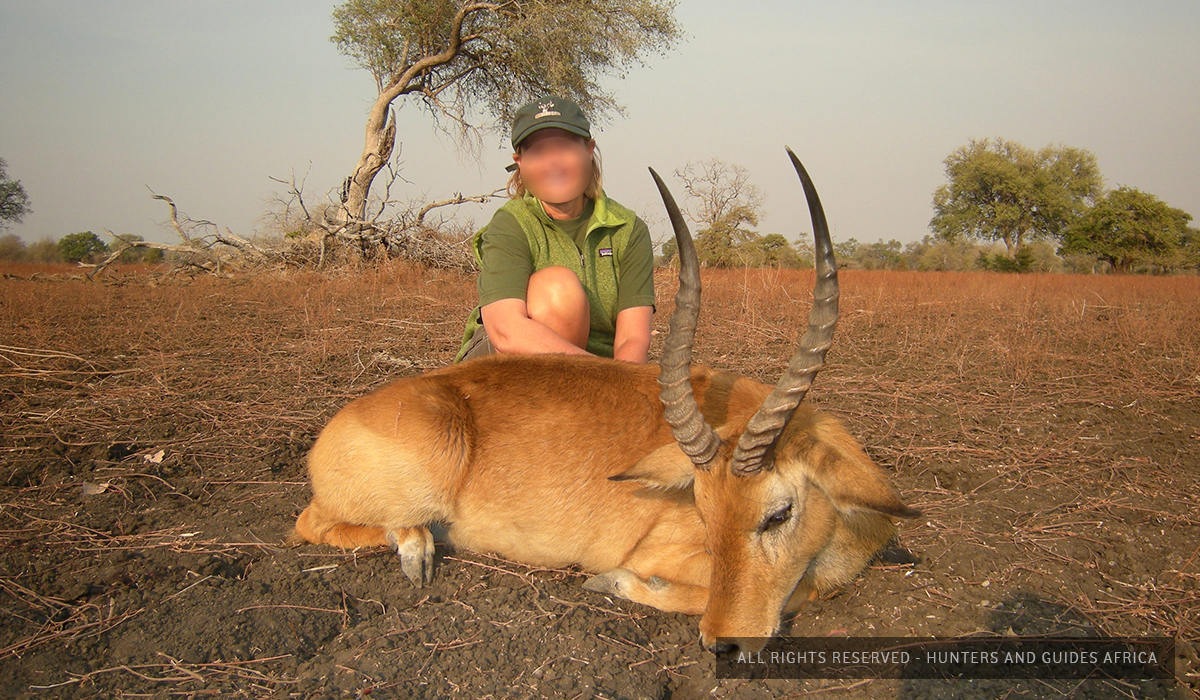
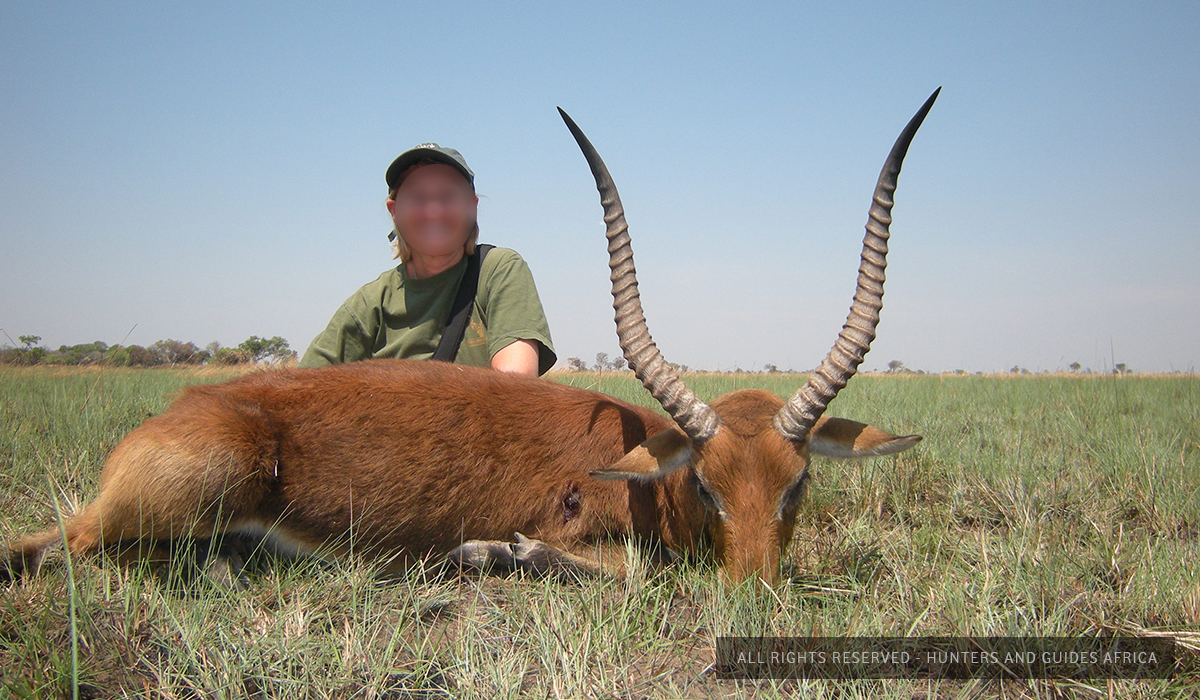
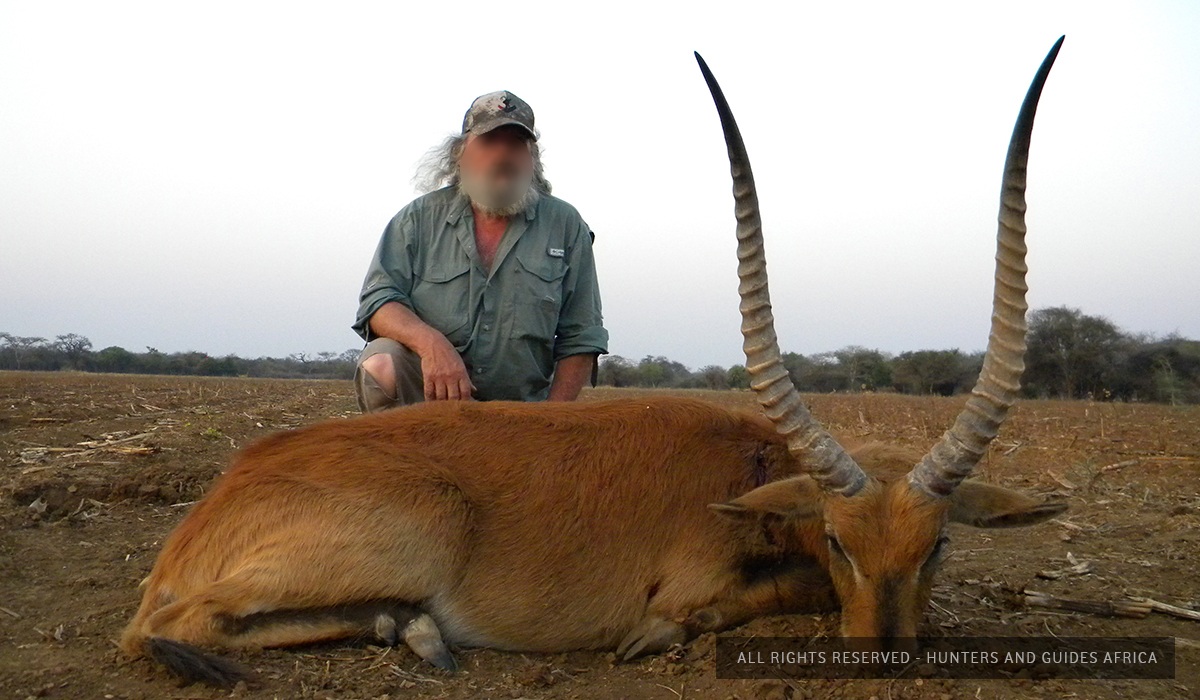
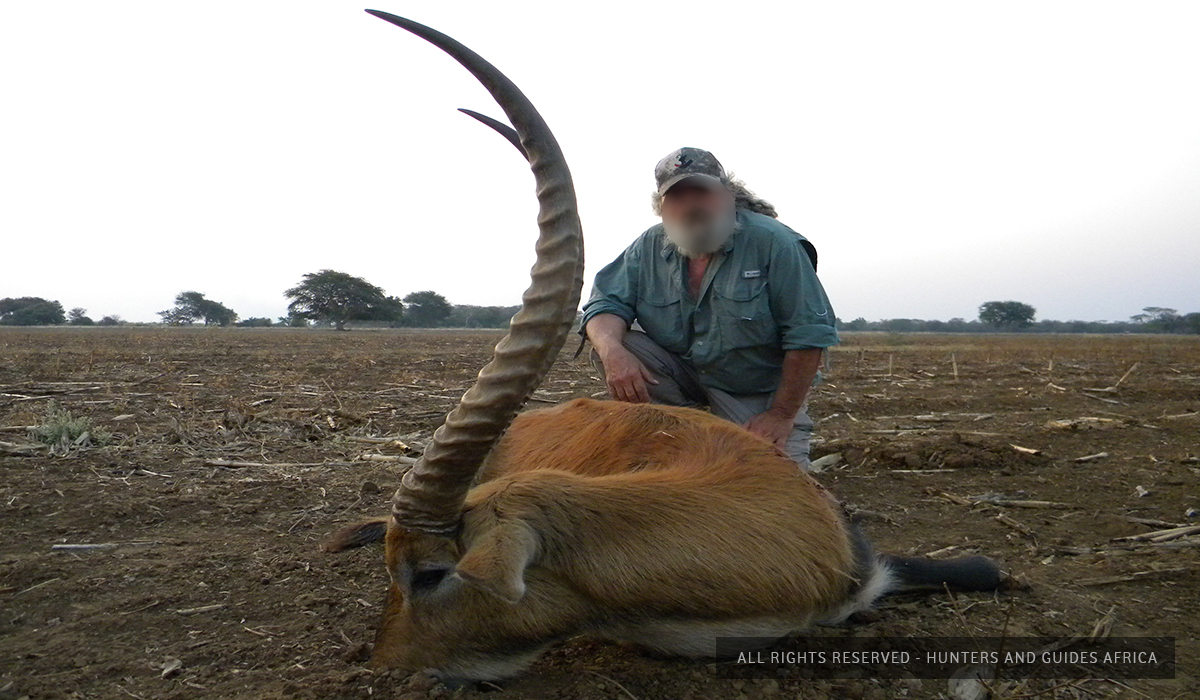
in Zambia where Red Lechwe, Yellow Backed Duiker
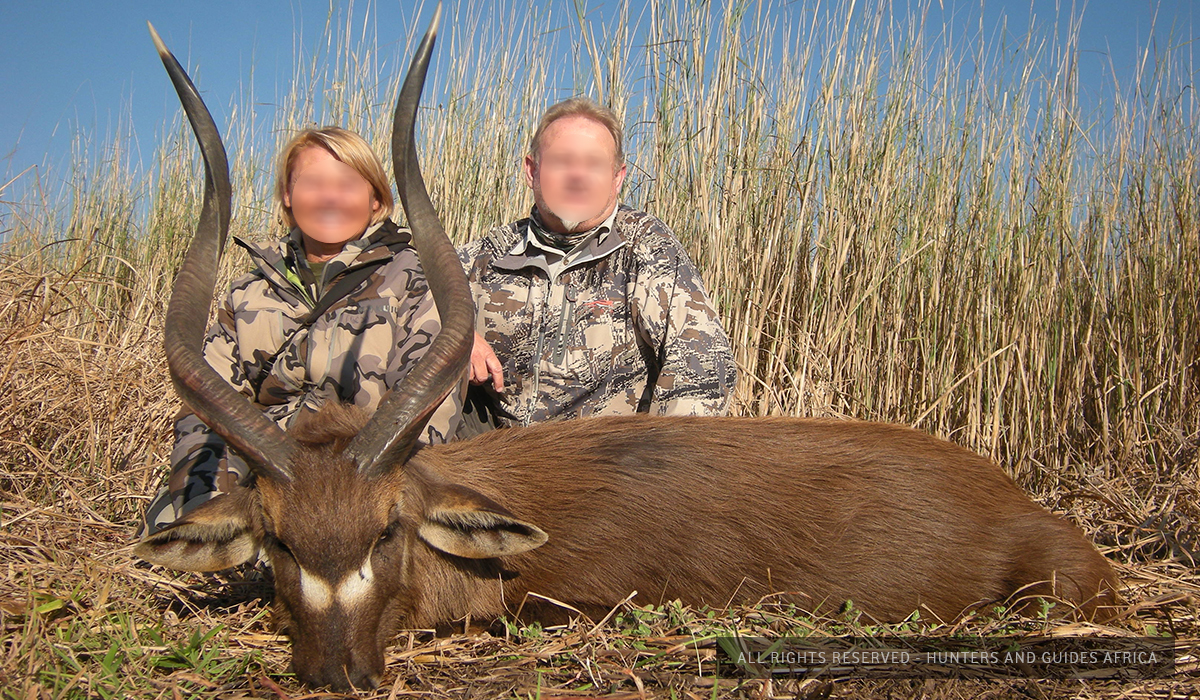
and Blue Duiker occur simultaneously. Sitatungas
are hunted in the permanent swamps areas, while
the plains host healthy populations of the Big
Cats.
CAMPS
Hunters & Guides camps are comfortably made
from natural materials. Each sleeping unit has
en-suite bathroom facilities. The centrally-located
dining room allows one to relax while listening
to the days hunting chatter around the open campfire.
GENERAL INFORMATION
FIREARMS
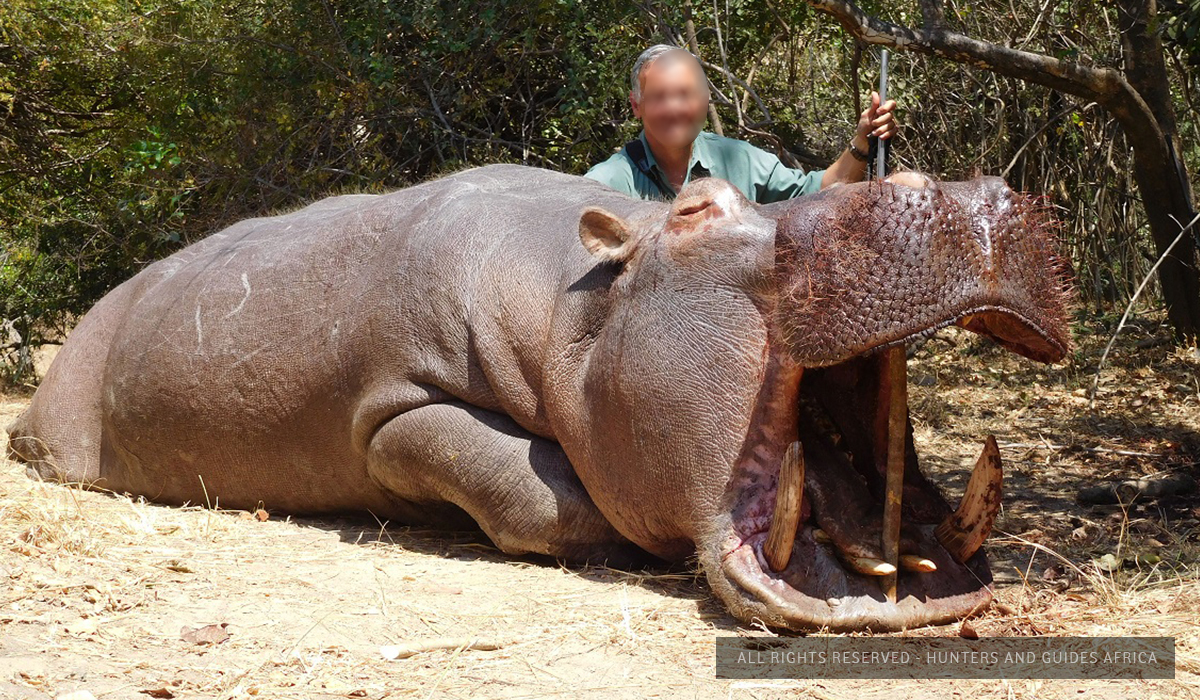
Elephant and Hippopotamus, rifled and nitro proofed
loading firearms of a calibre not less than 9.5
mm (.375), chambered to take a nitro express cartridge.
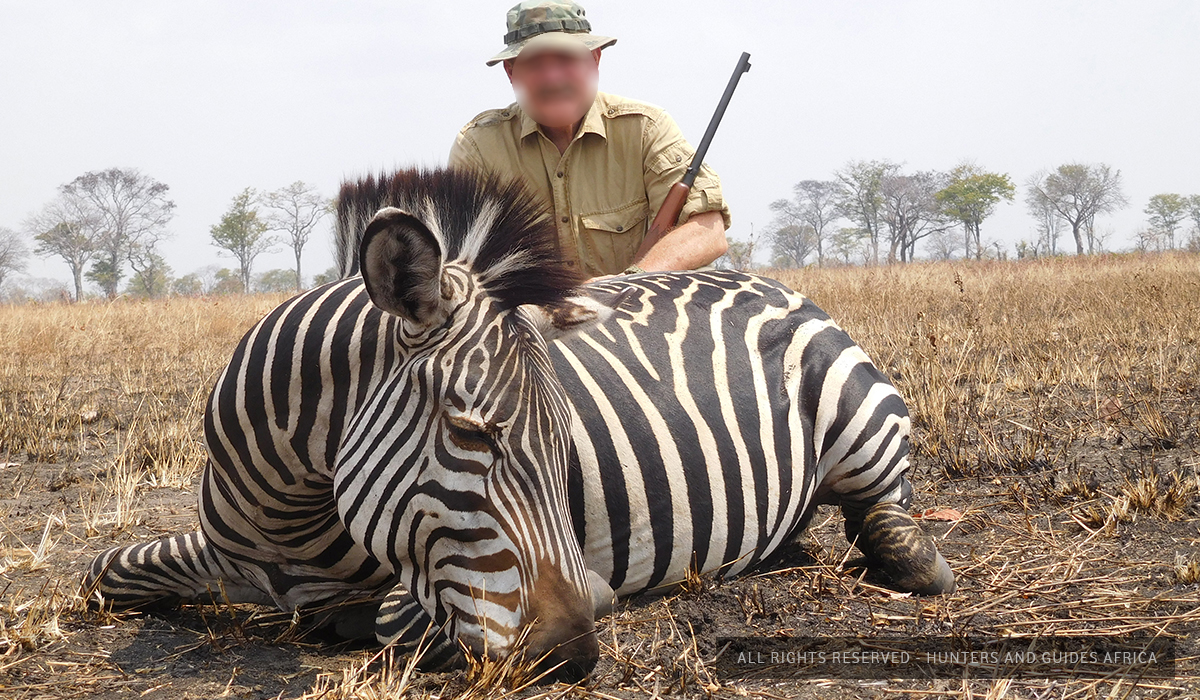
Eland, Buffalo, Kudu, Leopard, Lion, Sable and
Zebra, rifled and nitro proofed firearms of a
calibre not less than 7.6 mm (.300), chambered
to take a nitro express cartridge. Other game
animals, shotgun or rifled and nitro proofed breach
loading firearms of a calibre not less than 6
mm (.243), chambered to take a nitro express cartridge.
All specified birds, shotgun or rifled and nitro
proofed breach loading firearms of a calibre not
less than 5.5 mm (.22), chambered to take a nitro
express cartridge.
There can be little doubt that the best all round
rifle for Zambia is that of the .375 calibre,
however a .416 or similar heavy calibre is a good
choice for Buffalo and a .300 would be ideal for
Plainsgame. The most important thing is to be
familiar with the gun you are using with a good
degree of accuracy at ranges of up to 200 metres.
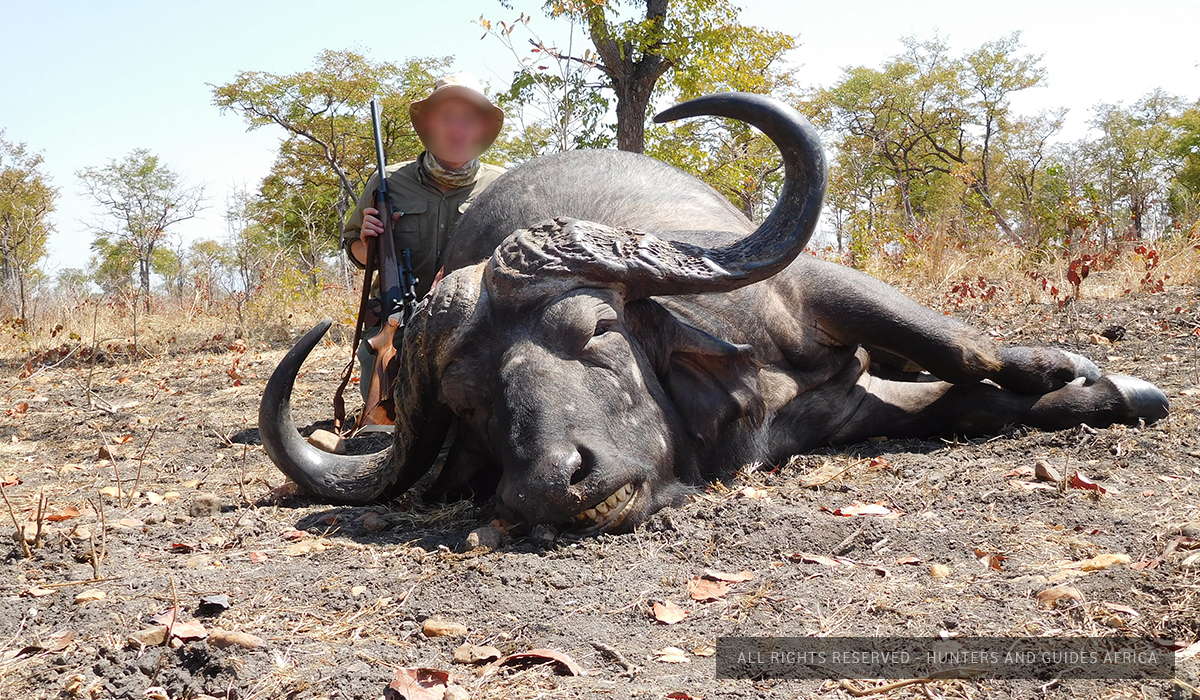
Buffalo, Lion and Leopard are usually taken at
under 100 metres.
Maximum permitted ammunition importation to Zambia
is 100 rounds per rifle and 200 rounds per shotgun.
Depending on guns to be used, it is recommended
that the following ammunition is brought into
Zambia: Large calibre - 20 solid and 50 soft nose;
Medium calibre - 50 soft nose; Shot gun - 200
rounds, No 4 or 6.
Handgun and bow hunting is permitted in Zambia
for non-dangerous species, this excludes Lion,
Leopard, Hippo and Buffalo unless prior permission
has been obtained from the Minister of Tourism.
Prior application for firearm imports have to
be made. These applications will be handled through
our office. However correct serial numbers must
be supplied well in advance to avoid disappointment
of refusal by the Zambian authorities.
HUNTING LICENCES AND EXPORT OF TROPHIES
Although all Government areas fees and safari
licenses are included in our daily rate, to simplify
matters all animal licenses have to be purchased
separately either before or on arrival in Lusaka.
It is therefore important to decide, prior to
arrival, which trophies are to be hunted. Additional
licenses cannot be purchased from camp and may
result in the loss of a hunting day to purchase
licenses in Lusaka.
|
